Houston Motorcycle Accident Lawyer
Serious motorcycle crash injuries and liability disputes.
Free Case Review
No fee unless we win. Tell us what happened — we respond fast, 24/7.
Riders know the truth that drivers forget: on Houston roads, a motorcyclist has no steel cage, no crumple zone, and no second chance when a car turns left across their lane. When a collision happens, the rider almost always pays the physical price — and then faces a second fight, because insurance adjusters and juries too often start from the assumption that the motorcyclist must have been speeding, weaving, or reckless. That assumption is beatable, but only with evidence.
RK LAW represents injured riders throughout Houston and the surrounding communities on a contingency-fee basis: no fee unless we win, the consultation is free, and we are available 24/7 — because crashes do not keep business hours.
The Bias Against Riders — and How Evidence Defeats It
Motorcyclists start most claims a step behind. Adjusters lean on the stereotype of the reckless biker to justify low offers, and defense lawyers count on jurors bringing the same assumption into the courtroom. The result is that a rider with a strong liability case can still be pressured into settling for less than the claim is worth — unless the stereotype is confronted head-on.
The answer is proof, not argument. Scene photographs, skid and gouge marks, vehicle damage patterns, intersection and doorbell camera footage, event data from the involved car, witness statements, and accident-reconstruction analysis can establish speed, lane position, and right-of-way objectively. We also document who you are — a licensed, trained rider on a maintained bike — because the facts of your riding history are often the quickest way to dismantle the caricature the insurer wants to sell.
How Houston Motorcycle Crashes Actually Happen
The most common serious motorcycle crash is not a rider losing control — it is a driver violating the rider's right of way. The classic pattern is the left-turning driver who cuts across an oncoming motorcycle at an intersection, often claiming afterward that the bike "came out of nowhere." A motorcycle's narrow profile makes it harder to see and makes drivers misjudge its speed and distance, but looked but didn't see is an explanation, not an excuse. Texas law required that driver to yield.
The other recurring patterns on Houston's freeways and feeder roads are unsafe lane changes into a rider's lane, drivers drifting into motorcycles sitting in blind spots, following too closely, and distracted driving. Road conditions play a role too: gravel, uneven pavement, and construction zones that a car shrugs off can be dangerous to two wheels. Each pattern points to different evidence, which is why the investigation should start from how the crash happened — not from the insurer's assumptions about riders.
Texas Helmet Law — and How Insurers Try to Misuse It
Texas requires riders under 21 to wear a helmet. Riders 21 and older may legally ride without one if they have completed an approved motorcycle operator training course or carry qualifying health insurance coverage (Tex. Transp. Code § 661.003). In other words, for a qualifying adult rider, going without a helmet is a lawful choice.
Insurers know this and still try to use helmet non-use to slash claims, arguing the rider caused their own injuries. That argument has real limits: riding without a helmet is not negligence when the law permits it, and it is irrelevant to injuries a helmet would not have prevented — a shattered leg, road rash, internal injuries, or the crash itself. Whether and how helmet evidence enters a case is a legal battleground, and we push back hard when an adjuster tries to turn a lawful choice into an excuse to underpay.
Motorcycle Injuries and Finding Enough Coverage
With nothing between the rider and the pavement, motorcycle injuries are severe out of proportion to the collision speed. We see road rash that requires debridement and skin grafts and leaves permanent scarring, traumatic brain injuries even in helmeted riders, fractures of the legs, pelvis, wrists, and collarbone, spinal injuries, and internal organ damage. Recovery often means surgeries, hardware, months of rehabilitation, and time away from work — losses that must be fully documented before any settlement is discussed.
Serious injuries also outrun small policies. Texas requires drivers to carry only $30,000 per person in liability coverage, and many carry nothing. That is why your own uninsured/underinsured motorist (UM/UIM) coverage is often the most important policy in a motorcycle case — it steps in when the at-fault driver's insurance is missing or exhausted, including in some hit-and-run scenarios. Texas insurers must offer UM/UIM unless it was rejected in writing, and we examine every policy that might apply to your crash.
Deadlines and Comparative Fault for Injured Riders
In most cases, Texas law gives you two years from the date of the crash to file a personal injury lawsuit (Tex. Civ. Prac. & Rem. Code § 16.003). Waiting costs riders more than most: camera footage is overwritten, the damaged bike gets repaired or scrapped, and witnesses scatter. The earlier the investigation starts, the more of the objective evidence that defeats rider bias survives. (This page is general information, not legal advice about your specific deadline.)
Texas applies modified comparative fault with a 51% bar (Tex. Civ. Prac. & Rem. Code § 33.001): your recovery is reduced by your percentage of fault, and if you are found more than 50% responsible, you recover nothing. Because bias inflates the fault percentage adjusters try to pin on riders, the comparative-fault fight is usually the central fight in a motorcycle case — and it is won with evidence gathered early.
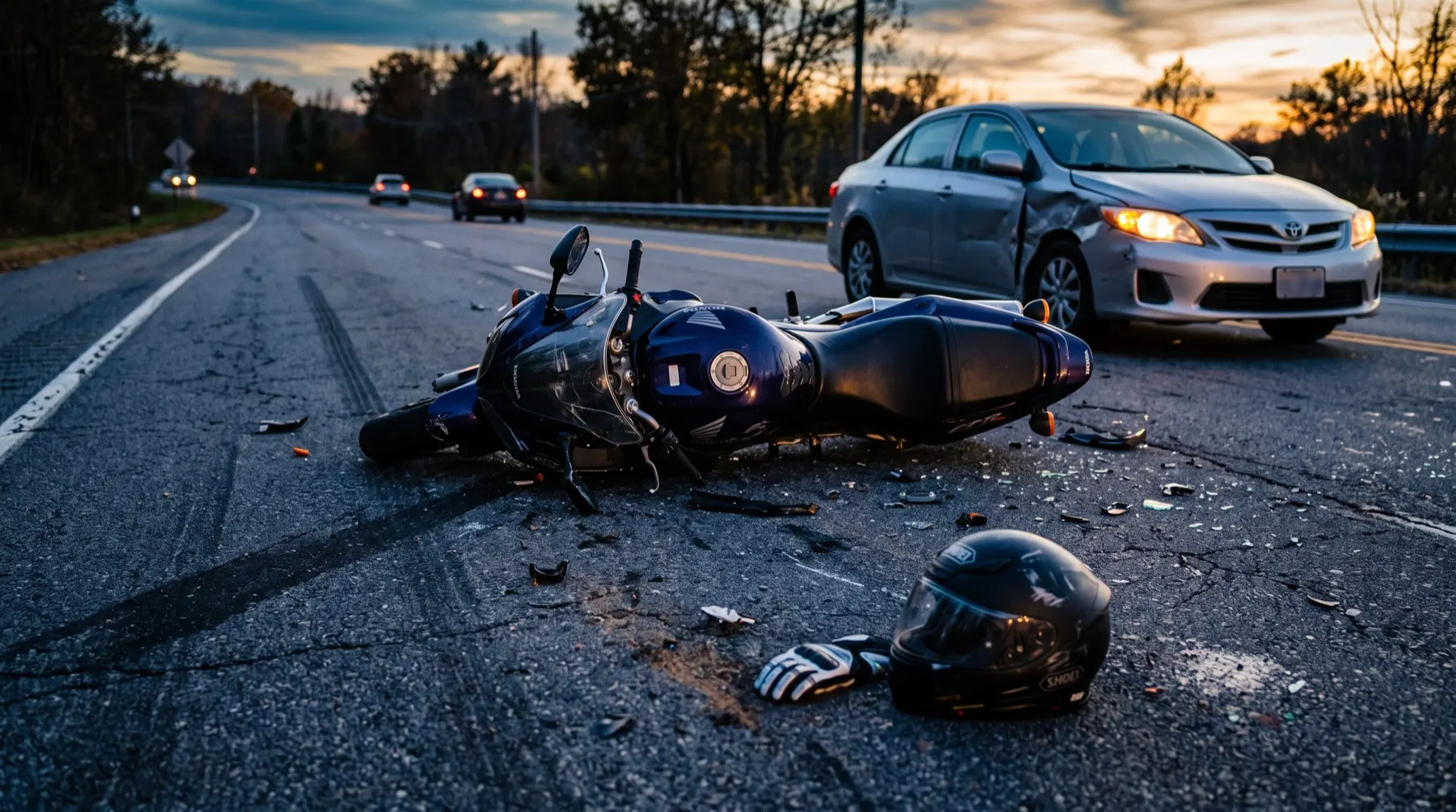
If you were able to at the scene, photographs of the vehicles, the roadway, and your gear are valuable; if you were not, we can still reconstruct the crash from what remains. Get medical care immediately even if you think you can walk it off, keep your damaged helmet and gear, and do not give the other driver's insurer a recorded statement. Your consultation with RK LAW is free, we are available 24/7, and you pay no fee unless we win.
You may be entitled to compensation for:
- Medical bills
- Lost wages
- Pain & suffering
- Future care
Motorcycle Accidents FAQs
How much does a motorcycle accident lawyer cost in Houston?
RK LAW works on a contingency fee: you pay nothing up front and no attorney's fee unless we recover compensation for you. The consultation is free and we are available 24/7.
How long do I have to file a motorcycle accident claim in Texas?
Generally two years from the date of the crash under Tex. Civ. Prac. & Rem. Code § 16.003, with shorter notice deadlines possible in cases involving government vehicles or road defects. Contact an attorney promptly to protect your specific deadline.
I wasn't wearing a helmet. Can I still recover compensation?
Often, yes. Texas law allows riders 21 and older who meet training or insurance requirements to ride without a helmet, so lawful non-use is not automatically negligence — and it is irrelevant to injuries a helmet would not have prevented. Expect the insurer to raise it; expect us to push back.
The driver says they never saw me. Does that hurt my case?
No — it usually helps it. Drivers have a duty to keep a proper lookout and yield the right of way. "I didn't see the motorcycle" is an admission that the driver failed to see what was there to be seen, not a defense.
Is lane splitting legal in Texas?
No. Texas has not legalized lane splitting, and insurers will assign fault to a rider who was riding between lanes at the time of a crash. But even then, comparative fault applies — if the other driver shares blame, you may still recover a reduced amount.
The at-fault driver's policy is too small for my injuries. What now?
We look for every available source: the driver's liability policy, your own UM/UIM coverage, PIP benefits, and any additional liable parties. UM/UIM is frequently the difference-maker in serious motorcycle cases, which is why we review your own policy along with the other driver's.
These answers are general information, not legal advice. Get a free case review for advice about your situation.
Ready to talk? It's free.
Get a free, no-obligation case review from a Houston Motorcycle Accident Lawyer. There's no fee unless we win.